

Shock. 2023 Jun 1;59(6):846-854 · 2023
Hemoperfusion using the LPS-selective mesoporous polymeric adsorbent in septic shock: a multicenter randomized clinical trial
Abstract
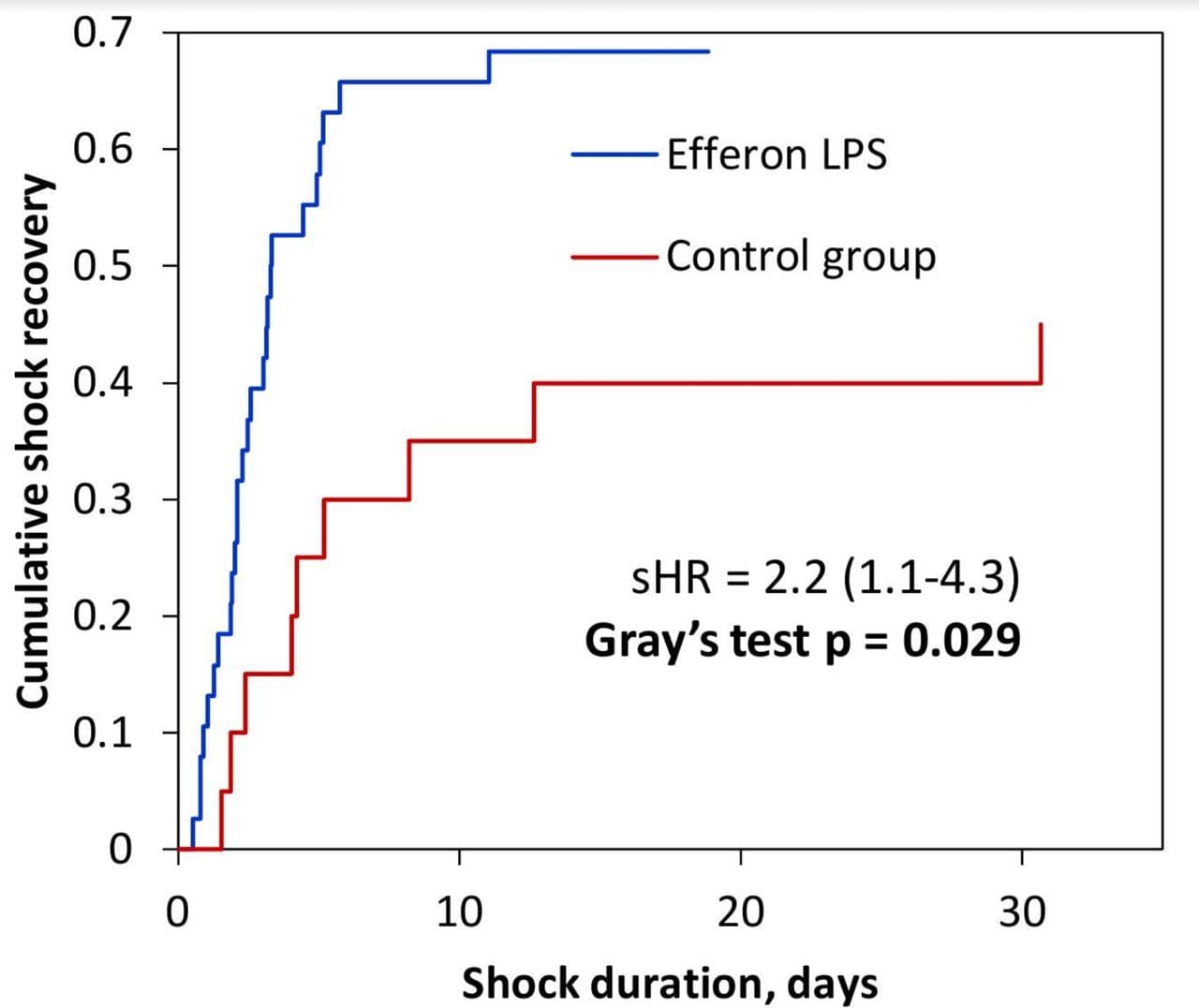
Extracorporeal hemoperfusion (EHP) may improve the course and outcomes of patients with septic shock by targeting cytokines or bacterial endotoxins (lipopolysaccharide [LPS]). Here, we present the results of a multicenter randomized controlled trial (clinicaltrials.gov/ct2/show/NCT04827407) to assess the efficiency and safety of Efferon LPS hemoperfusion cartridges engineered for multimodal targeting LPS, host-derived cytokine and damage-associated molecule pattern molecules.
Patients with intra-abdominal sepsis (IAS) and septic shock (Sepsis-3) were subjected to EHP procedures (n = 38). Control patients with IAS and septic shock (n = 20) were treated using conventional protocols without EHP. The primary endpoint was resolution of septic shock. Secondary endpoints included MAP, vasopressor drug dose, PaO2/FiO2 ratio, SOFA score, length of stay in the ICU, and satisfaction with device use by a 5-point Likert scale. Clinical laboratory tests for a blood cells count, lactate and creatinine concentration, nephelometry test for C-reactive protein, immunochemiluminescent test for procalcitonin and immunoenzyme analysis for IL-6 concentration were used to monitor the EHP effect vs. the control group.
Data were analyzed followed the intention-to-treat approach. Wilcoxon STATA 16.0 (StataCorp, USA) and Excel 2019 with XLStat 2019 add-in (Addinsoft) were used for statistical analysis of the results. The Fine and Gray method of competing risks was used to analyze the primary endpoint and other data representing the time to event.
EHP resulted in a significant and rapid increase in mean arterial pressure (MAP) and PaO2/FiO2 ratio, progressive decline in norepinephrine doses, and multiorgan deficiency, as evaluated by SOFA scores. Importantly, EHP led to significantly rapid cumulative mechanical ventilation weaning compared to control group (sHR = 2,5; р = 0.037). Early 3-day mortality was significantly reduced in the Efferon LPS vs. control group, however, no significant improvements in survival in 14 and 28 days was revealed. Laboratory tests showed rapidly decreased levels of LPS, procalcitonin, C-reactive protein, interleukin-6, creatinine, leukocytes, and neutrophils only in the Efferon LPS group. Results demonstrate that EHP with Efferon LPS is a safe procedure to abrogate septic shock and normalize clinical and pathogenically relevant biomarkers in patients with IAS.
More publications
- Eferon LPS NEO hemoadsorption in pediatric sepsis patients: a multicenter controlled studyESICM LIVES 2025. ICMx 13 (Suppl 1), 109 (2025). · 2025
- Multimodal LPS-selective hemoadsorption combined with hemodiafiltration in the intensive care of gram-negative sepsis: a multicenter observational study.General Reanimatology. 2025;21(6):4–12. · 2025
- Hemoperfusion with Efferon LPS NEO device reverts multiple organ failure, decreases IL-6 and TNF levels and systemic immune inflammation in children with sepsisCritical Care 2024, 28(Suppl 1):P220 · 2024
- Extracorporeal adsorption of cytokines in cytokine release syndrome in a patient with acute lymphoblastic leukemia after therapy with T cells with a chimeric antigen receptor. Clinical observationTherapeutic archive. 2021; 93 (7): 811-817 · 2021
- Application of novel device Efferon LPS in hemoperfusion for simultaneous removal of endotoxin and cytokines in a patient with septic shockWorld Journal of Medical Case Reports. Vol. 2, No. 3, 2021, pp. 46-50. · 2021
- Hemosorption carried out by a column filled with hypercrosslinked styrene-divinibenzene copolymer with an immobilized LPS-selective ligand in a complex of intensive treatment of acute lung injury in the surgical treatment of lung cancer (clinical observation)General resuscitation. 2020; 16 (4): 14-20. · 2020
- Application of adsorbent based on a hypercrosslinked styrene-divinylbenzene copolymer with an immobilized LPS-selective ligand in hemoperfusion for the treatment of patients with septic shockGeneral resuscitation. 2020; 16 (6): 31-53. · 2020
- Efficiency and safety of a new product for LPS-selective hemosorption (experimental study)General resuscitation. 2018; 14 (6): 51-60. · 2018
- Polymeric sorbent, method for its production and use.Invention patent RU 2653125 C1. Date of registration: 23.05.2017 · 2017
- Method for determination of bacterial endotoxin in biological fluids.Invention patent RU 2691413 C1. Date of registration: 26.12.2017 · 2017
- Methods for the determination of bacterial endotoxin in critical care medicine (review).General resuscitation. 2017; 13 (5): 109-120. · 2017
- Sorbents for extracorporeal removal of toxic substances and molecules with unwanted biological activity (review)General resuscitation. 2016; 12 (6): 82-107. · 2016